
DEMO CONTENT
SAMPLE ARTICLE — FOR WEBSITE DEMONSTRATION ONLY
Concept / Sample Content for Website Demonstration. This illustrative draft is not verified technical advice or a report of a company event, customer project, tested product, or endorsed standard.
Introduction
Professional AV projects work best when decisions are grounded in real use, physical conditions and verifiable design criteria. This independent industry overview explores meeting room display size for consultants, systems integrators and technical buyers. It is educational editorial content, not a report of a company product, customer project or completed test.
Start from viewing tasks
Display size is a usability decision. A room showing detailed spreadsheets has different needs from one showing presenter videos or simple signage. Identify the smallest relevant content and the farthest intended viewing positions before choosing an image size.
Capture geometry and placement early
Record room depth, seating layout, display wall position, obstructions and available mounting surface. Image size and viewing position interact; specifying a screen based only on diagonal inches can result in poor legibility even when the display itself is high quality.
Account for content and signal chain
Source resolution, aspect ratio, presentation templates and processor settings influence the experience. Coordinate display selection with the source inventory and the people who prepare the actual content.
Consider the installed environment
Light levels, reflections, maintenance access, power and architectural finishes should be discussed during planning. Where wall structure and mounting loads are involved, follow project-specific engineering and safety review.
Validate at real seats
Review representative content from front, middle and back positions, including any accessible seating areas. Record the result and adjust the layout before finalizing procurement. AVIXA provides a viewing-task-based framework for this planning question.
Suggested next step
Before requesting a quotation, document the venue, user scenarios, key constraints and required handover evidence. Ask prospective suppliers to substantiate product capabilities with current documentation and to distinguish assumptions from validated results.
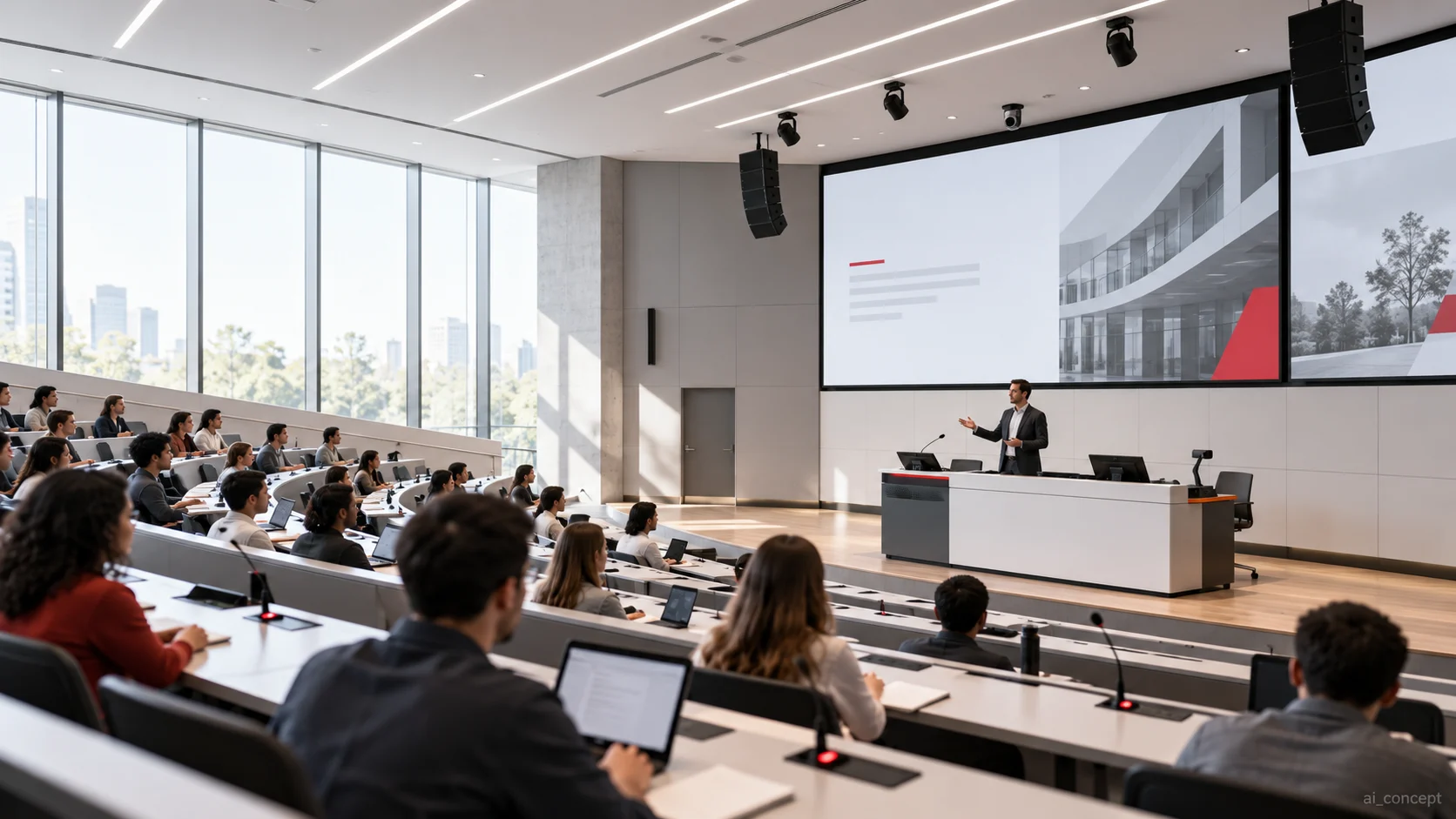
Editorial Preview · AI concept illustration. This is not company news, a verified product specification or a customer project.