
DEMO CONTENT
SAMPLE ARTICLE — FOR WEBSITE DEMONSTRATION ONLY
Concept / Sample Content for Website Demonstration. This illustrative draft is not verified technical advice or a report of a company event, customer project, tested product, or endorsed standard.
Introduction
Professional AV projects work best when decisions are grounded in real use, physical conditions and verifiable design criteria. This independent industry overview explores loudspeaker coverage planning for consultants, systems integrators and technical buyers. It is educational editorial content, not a report of a company product, customer project or completed test.
Coverage is a spatial requirement
A loudspeaker choice that looks suitable on paper may still produce uneven results if the room geometry and audience areas have not been defined. Start by mapping where listeners will actually be seated or standing, including balconies and temporary floor configurations.
Compare configurations at system level
Line arrays, point-source systems and distributed loudspeakers are different design approaches, not universal rankings. The appropriate option depends on throw distance, required coverage, mounting opportunities, sightlines and acoustic environment. Verify designs using data for the exact offered equipment.
Review low-frequency deployment separately
Subwoofer placement affects how low-frequency sound interacts across listening areas. Coordination with the main system and room boundaries matters. An engineer should examine the proposed positions and signal processing rather than treating the lowest frequency specification as the sole selection criterion.
Treat mounting and service access as project requirements
Suspended systems require project-specific structural checks, rigging documents and competent installers. Confirm access for inspection, cables and future maintenance. Promotional renderings cannot establish load capacity or safe installation.
Include measurement in handover
Set a measurement plan and acceptance criteria that correspond to the design brief. Record the final system configuration and any deviations from the proposed layout. If site conditions change, update the expected coverage assessment before declaring acceptance.
Suggested next step
Before requesting a quotation, document the venue, user scenarios, key constraints and required handover evidence. Ask prospective suppliers to substantiate product capabilities with current documentation and to distinguish assumptions from validated results.
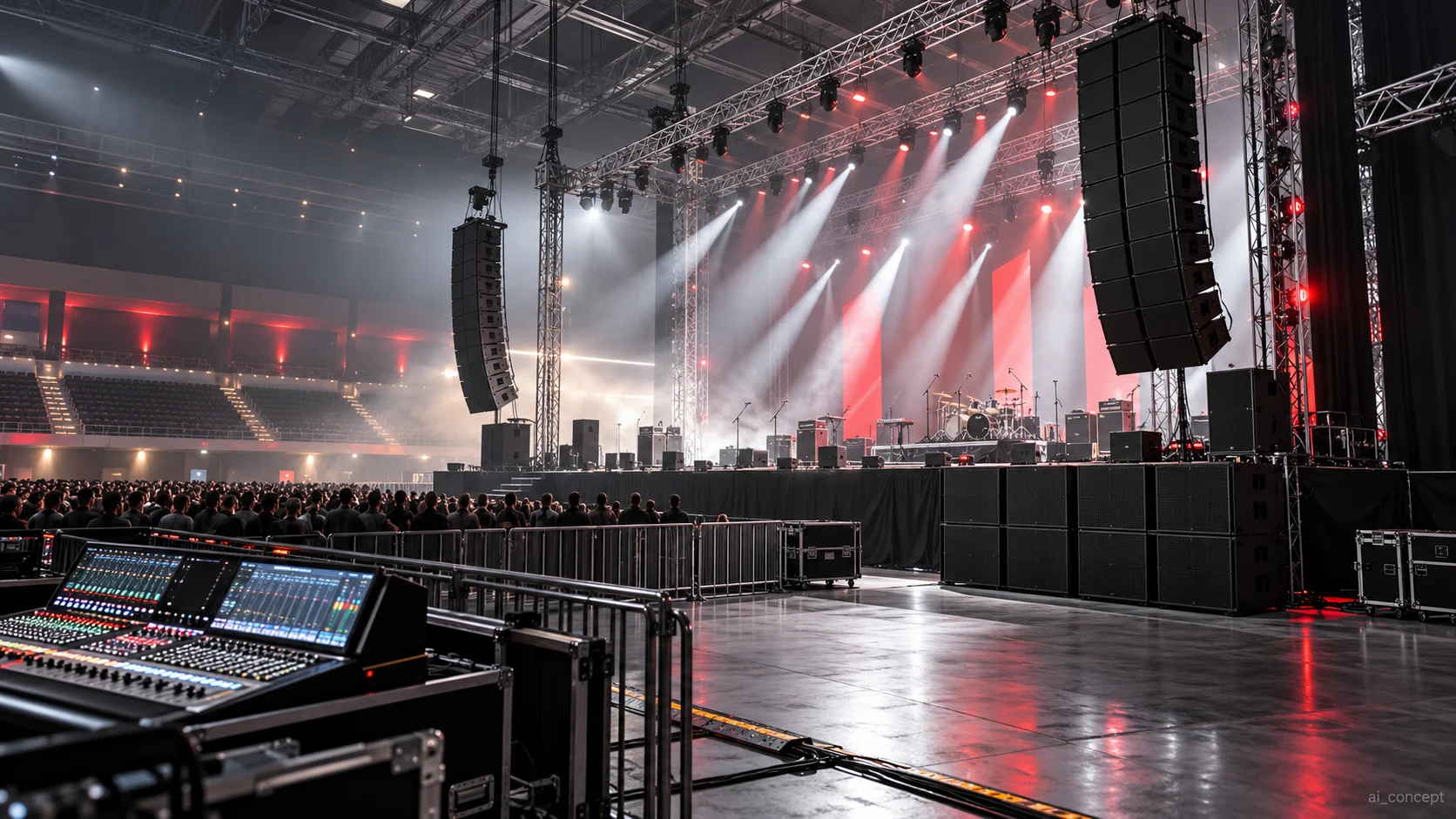
Editorial Preview · AI concept illustration. This is not company news, a verified product specification or a customer project.