
DEMO CONTENT
SAMPLE ARTICLE — FOR WEBSITE DEMONSTRATION ONLY
Concept / Sample Content for Website Demonstration. This illustrative draft is not verified technical advice or a report of a company event, customer project, tested product, or endorsed standard.
Introduction
Professional AV projects work best when decisions are grounded in real use, physical conditions and verifiable design criteria. This independent industry overview explores conference microphone placement for consultants, systems integrators and technical buyers. It is educational editorial content, not a report of a company product, customer project or completed test.
Speech quality starts in the room
A good conference call depends on capturing the speaker clearly before processing and transmission. Room acoustics, background noise and distance between the talker and microphone determine the quality of that starting signal. Upgrading downstream electronics cannot fully repair poor acoustic capture.
Map real speaking positions
Do not design only for a fully occupied room. Identify where participants sit during normal meetings, where presenters stand and how seating changes during collaborative workshops. The microphone pickup plan should support these patterns instead of depending on an idealized table diagram.
Consider room architecture and microphone type
Tabletop, gooseneck and ceiling-mounted microphones each have practical advantages and constraints. Visibility, ceiling height, furniture arrangement and reverberation can influence the decision. Compare models using verified pickup behaviour and manufacturer guidance, not generic assumptions.
Coordinate microphones, loudspeakers and DSP
Speech pickup is one part of a larger signal path that may include automatic mixing, echo cancellation, routing and local reinforcement. Document signal flow, audio playback modes and conferencing platforms. Ensure integrators test the actual collaboration workflow in the installed room.
Test from the user position
During acceptance, listen and record from representative seats and remote endpoints. Try overlapping speech, quiet talkers, background noise and source changes. Capture problems as actionable commissioning items and retain configuration records for support.
Suggested next step
Before requesting a quotation, document the venue, user scenarios, key constraints and required handover evidence. Ask prospective suppliers to substantiate product capabilities with current documentation and to distinguish assumptions from validated results.
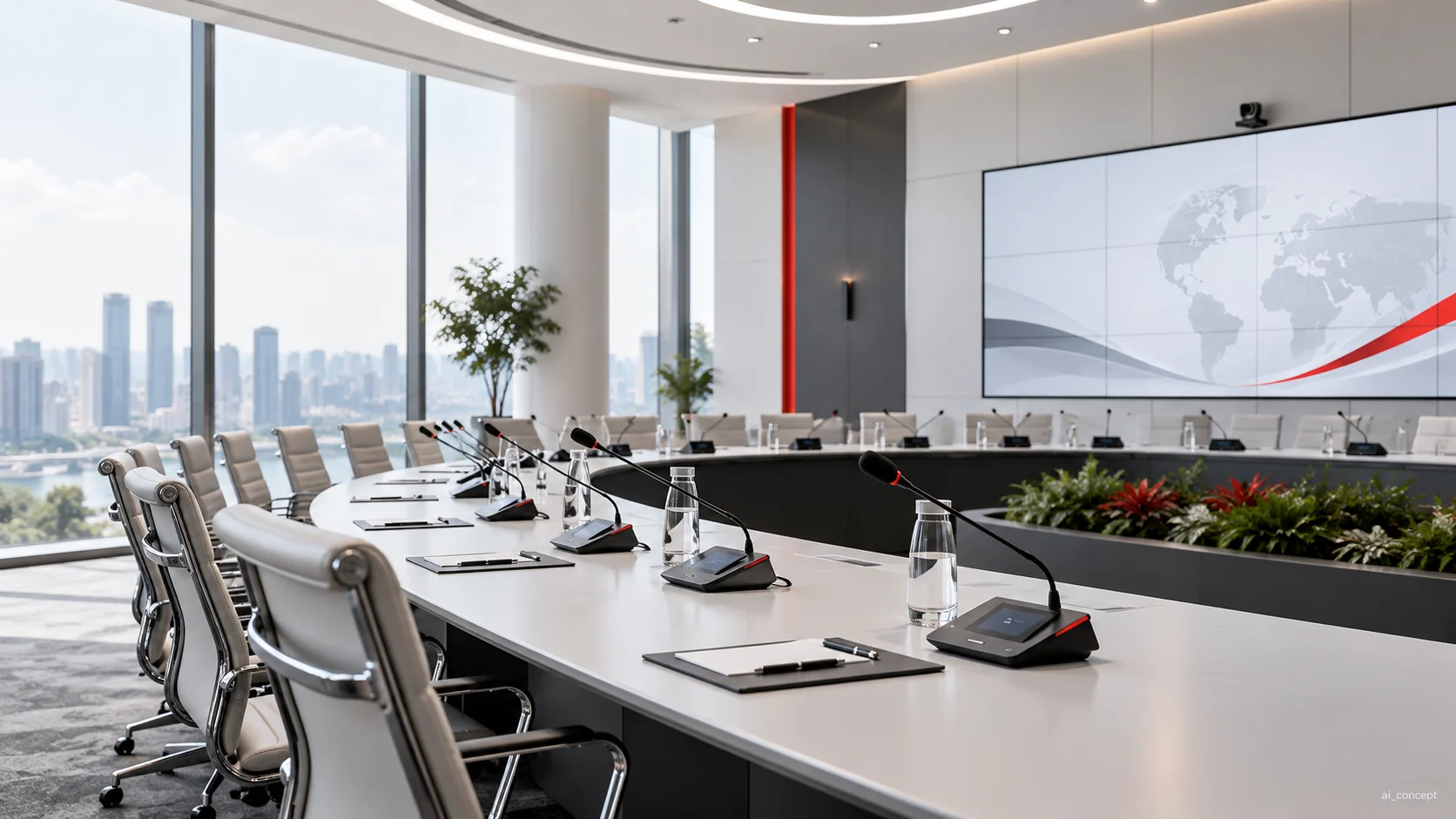
Editorial Preview · AI concept illustration. This is not company news, a verified product specification or a customer project.