
DEMO CONTENT
SAMPLE ARTICLE — FOR WEBSITE DEMONSTRATION ONLY
Concept / Sample Content for Website Demonstration. This illustrative draft is not verified technical advice or a report of a company event, customer project, tested product, or endorsed standard.
Introduction
Professional AV projects work best when decisions are grounded in real use, physical conditions and verifiable design criteria. This independent industry overview explores DMX lighting control planning for consultants, systems integrators and technical buyers. It is educational editorial content, not a report of a company product, customer project or completed test.
Check control compatibility
Control protocols, fixture modes and console capabilities must be checked against the exact equipment documentation. This sample text does not verify a standard, a device feature or compatibility between products.
Design around the actual show workflow
Clarify whether the space needs programmed productions, conference looks, touring-event patching or routine architectural scenes. Operator skill, backup requirements and the expected pace of change affect how the control system should be organized.
Map every control and infrastructure path
Document where fixtures connect, how data distribution is arranged and who owns network or cable maintenance. A complete plan should include addressing conventions, physical protection, power separation and recovery procedures subject to applicable rules.
Review changes before deployment
Fixture substitutions, software changes and control-mode changes can alter the patch or channel requirements. Freeze the show configuration when necessary, retain versions and test critical cues before public operation.
Specify acceptance checks
Test the intended fixture functions, operating scenes, manual overrides and expected failure recovery. Qualified personnel should verify electrical safety and rigging separately from control communications.
Suggested next step
Before requesting a quotation, document the venue, user scenarios, key constraints and required handover evidence. Ask prospective suppliers to substantiate product capabilities with current documentation and to distinguish assumptions from validated results.
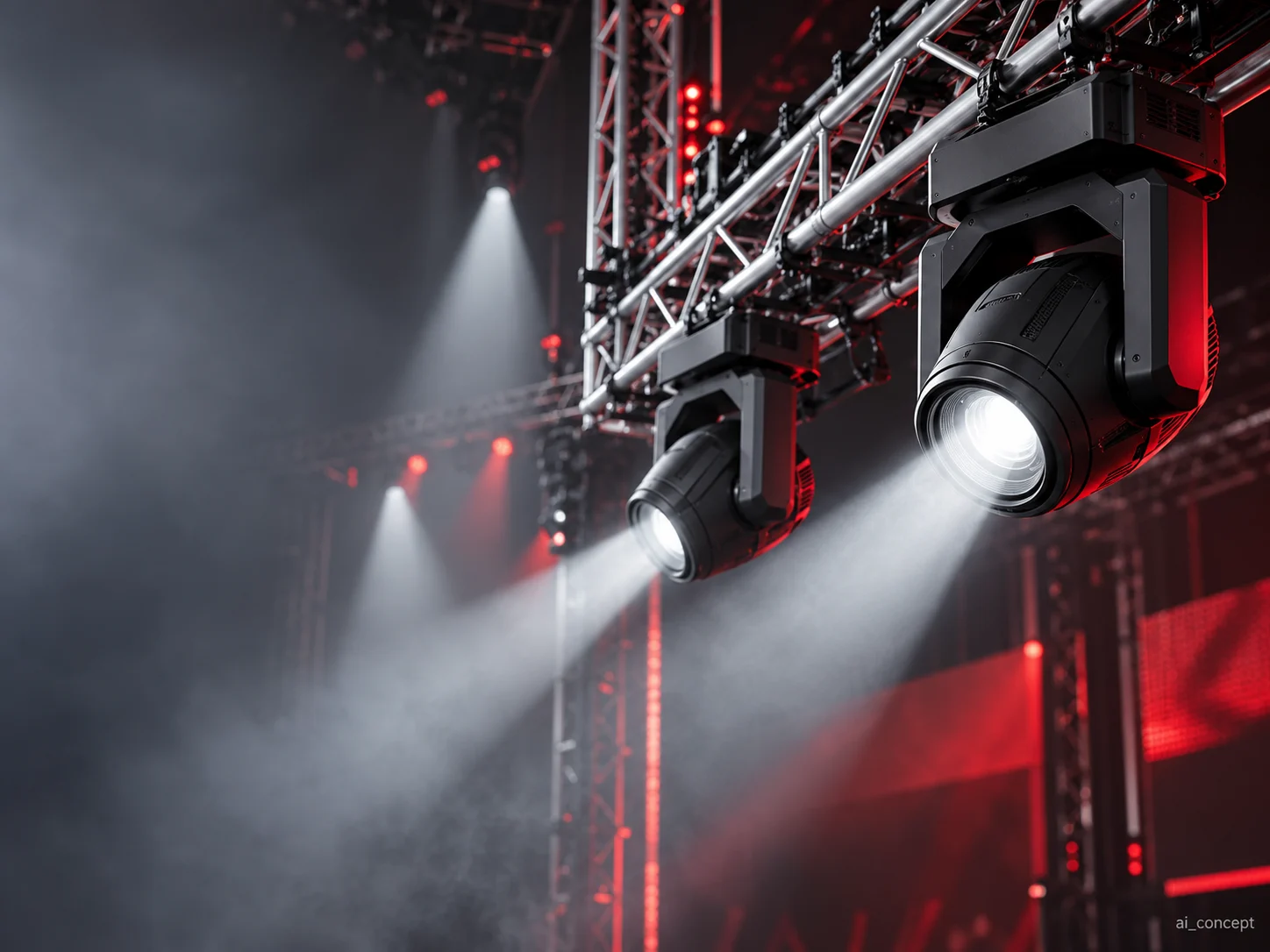
Editorial Preview · AI concept illustration. This is not company news, a verified product specification or a customer project.