
DEMO CONTENT
SAMPLE ARTICLE — FOR WEBSITE DEMONSTRATION ONLY
Concept / Sample Content for Website Demonstration. This illustrative draft is not verified technical advice or a report of a company event, customer project, tested product, or endorsed standard.
Introduction
Professional AV projects work best when decisions are grounded in real use, physical conditions and verifiable design criteria. This independent industry overview explores av system design brief for consultants, systems integrators and technical buyers. It is educational editorial content, not a report of a company product, customer project or completed test.
Start with operations, not a shopping list
An equipment list does not explain what a room has to accomplish. Define the audience, primary activities, supported user types and critical events first. For a meeting room, the essential tasks might be discussion, remote collaboration and presentation sharing. For a performance venue, audience geometry, production turnaround and changing stage formats may have greater importance.
Document the physical and digital environment
Collect current floor plans, ceiling heights, potential mounting locations, power and cooling provisions, cable routes, room acoustic constraints and IT responsibilities. Where files are incomplete, flag the missing conditions. A concept prepared without site information should not be used as a final installation drawing.
Define success before requesting quotations
Translate requirements into checks that can be observed: whether every intended presentation source works, whether operators can switch common room modes, whether voice is intelligible at normal seating positions and whether required documents have been handed over. Record the acceptance method rather than promising a performance number without measurements.
Separate must-haves from options
Specify mandatory interoperability, safety and service requirements separately from attractive extra features. Ask bidders to note substitutions, exclusions and assumptions. An explicit assumptions register is often more useful than an oversized catalogue comparison.
Prepare a useful RFQ package
Include user scenarios, existing infrastructure, project schedule, jurisdiction, drawings, target interfaces, documentation deliverables and acceptance responsibilities. Request model-specific datasheets and applicable approvals for every proposed product.
Suggested next step
Before requesting a quotation, document the venue, user scenarios, key constraints and required handover evidence. Ask prospective suppliers to substantiate product capabilities with current documentation and to distinguish assumptions from validated results.
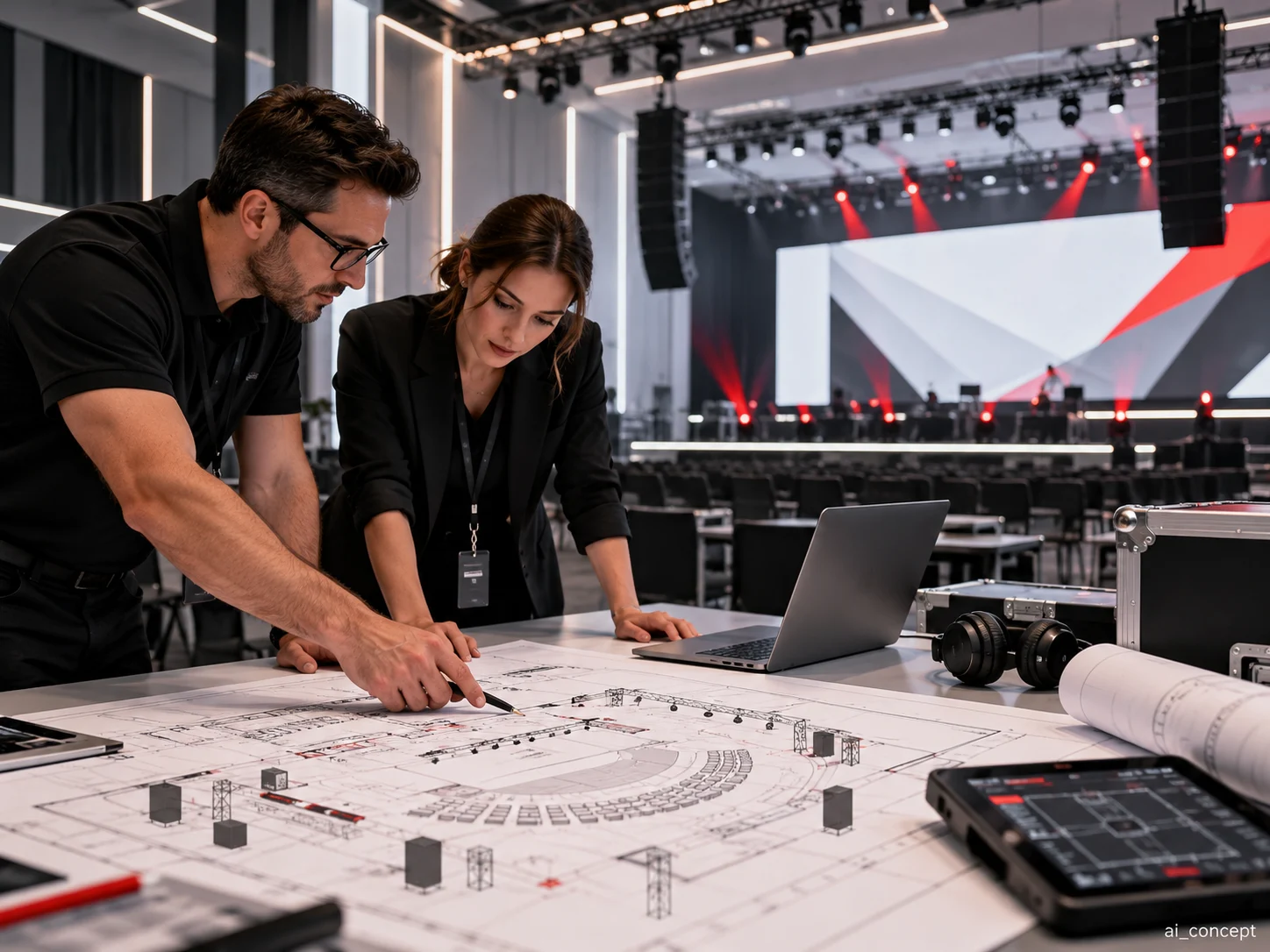
Editorial Preview · AI concept illustration. This is not company news, a verified product specification or a customer project.